
Puppy Biting: Why It Happens & How to Stop It (Without Punishment)
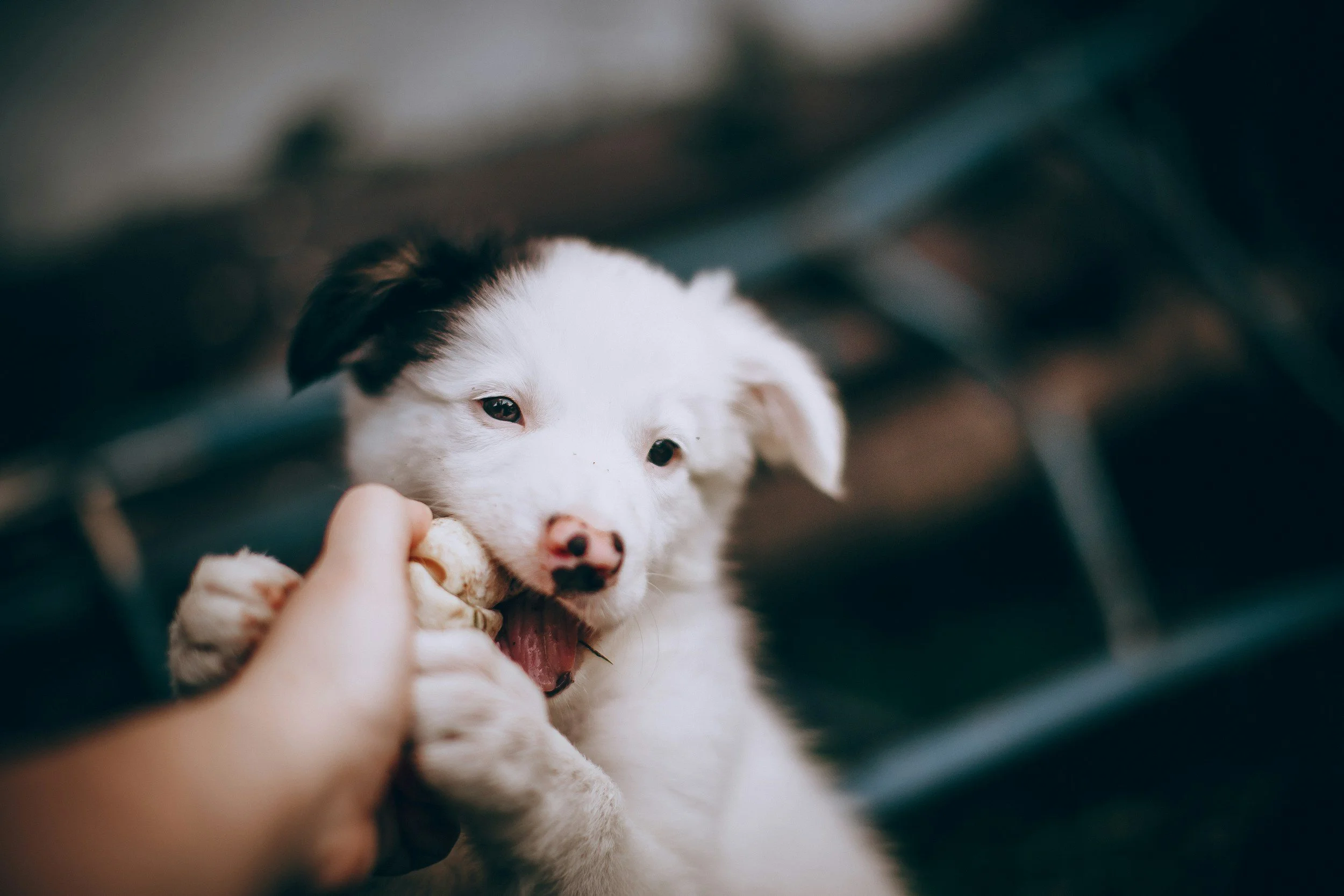
Puppy Biting: You Are Not Doing Anything Wrong
If your puppy is nipping your hands, grabbing sleeves, or biting ankles, you’re not alone—and you’re not doing anything wrong. Puppy biting is one of the most common concerns puppy parents face, and in most cases, it’s a normal developmental phase, not a behavior problem.
The good news? With the right puppy training plan that combines structure, guidance, and positive methods, puppy biting improves quickly—without yelling, punishment, or force.
Why Do Puppies Bite?
Just like human babies, puppies explore the world with their mouths. Biting is how they play, communicate, and learn about their environment.
When puppies seek engagement, they often pounce or nip as you move past them. This isn’t misbehavior—it’s instinct. Puppies are natural movement-trackers and “baby hunters,” hard-wired to chase and pounce on anything that moves, which is why wiggling hands, shuffling feet, and flowing clothing are so tempting.
Common reasons puppies bite include:
Movement triggers like hands, feet, and loose clothing
Under-stimulation or lack of appropriate chew outlets
Over-excitement and high arousal
Being overtired (the classic puppy “witching hour”)
Hunger or frustration
Teething discomfort
Puppy biting is not aggression, dominance, or defiance. It’s a normal developmental phase and a sign your puppy is still learning how to regulate their body, emotions, and impulses. With clear guidance and thoughtful structure, this stage passes—and your puppy learns how to use their mouth gently.
The Real Goal: Teaching a Gentle Mouth (Bite Inhibition)
When it comes to puppy biting, the goal isn’t to stop it instantly—it’s to teach bite inhibition.
That means your puppy learns:
How to use their mouth softly
How to disengage when they make contact
A well-trained puppy develops the “Oops, my bad” response—light contact followed by an immediate release—over time through trial and error. This is one of the most important safety skills your dog will ever learn, so understanding how to help your puppy learn bite inhibition is part of the process of training them to be well-mannered adults.
Common Mistakes That Make Puppy Biting Worse
Many well-meaning puppy owners unintentionally reinforce biting by:
Pulling hands or clothing away without redirecting the puppy
Playing with puppies using your hands instead of toys
Giving attention when biting happens (even scolding counts as attention)
Allowing puppies to become overtired or overstimulated
Using short tug toys that bring hands too close to sharp teeth
Small changes in handling and management can dramatically reduce puppy biting.
Scolding often backfires. Raising your voice can create a strong, emotional response that actually increases arousal. To a puppy, yelling may sound a lot like excited barking, which can escalate the behavior rather than stop it. From your puppy’s perspective, biting worked—it got a big reaction and your attention.
Calm, clear guidance teaches puppies far more effectively than big reactions ever will.
What Actually Works: A Simple, Positive Puppy Biting Plan
1. Structure Your Puppy’s Day
A well-rested, well-regulated puppy bites less.
Your puppy’s daily routine should include:
Frequent naps
Short training sessions (5-15 minutes each)
Exercise through fetch, supervised exploration indoors or in the backyard, or walks once fully vaccinated
Safe chew outlets and enrichment toys
Managed freedom using a lightweight drag leash
Many puppy biting issues improve dramatically once puppies get enough sleep and mental and physical stimulation throughout the day.
RELATED POST: How to Socialize Your Puppy Before They Are Fully Vaccinated
2. Use Long Toys and a Drag Leash
Long tug toys keep your hands safely away from sharp puppy teeth
A drag leash is a lightweight leash your puppy wears while roaming free, allowing you to calmly interrupt unwanted behavior and redirect them without turning yourself into a moving target
These tools help you stay neutral, clear, and consistent, and prevent your day from turning into “puppy chaos.”
3. Redirect, Don’t Just Interrupt
As a puppy parent, you’re constantly teaching what is and is not appropriate.
When you stop unwanted behavior, always guide your puppy toward something they can do. This helps channel their energy and natural bite drive into appropriate outlets.
Good redirection options include:
Your puppy’s own toys
Digestible chews like bully sticks, yak chews, or non-splintering coffee wood
Toys that match your puppy’s chewing preferences (for example, leather-like toys for puppies drawn to shoes or plastic-style toys for puppies who love harder textures)
Redirection works best when it’s immediate and consistent. Commit to supervising your puppy whenever they roam free so that you can provide guidance when and where needed.
4. Teach Self-Control Through Games
If your puppy is biting because they’re seeking engagement, meeting that need proactively is essential. Brief, structured training sessions give your puppy the interaction they’re craving—without encouraging biting.
Training games that build focus and self-control are one of the most effective ways to teach puppies how to think during moments of excitement. Instead of reacting impulsively, your puppy learns to pause, make choices, and regulate their body—skills that naturally reduce biting over time.
Simple games like:
Treat search games that engage your puppy’s natural desire to forage
“It’s Yer Choice” to teach puppies to earn rewards through polite behavior
Collar-grab games that help puppies feel comfortable with hands reaching toward them
Structured tug that directs your puppy’s bite drive into appropriate outlets
teach puppies how to pause, disengage, and make better choices—even when aroused.
At Dog Savvy Positive Dog Training, we use a method called Learning Through Games of Choice, which helps puppies learn focus, self-control, and obedience in a way that feels fun and intuitive. Tug is used strategically as a reward, allowing puppies to satisfy their natural bite drive on their own toys instead of human skin or belongings.
This approach builds confidence, clarity, and calmer behavior—without pressure or punishment.
5. Provide Opportunities to Burn Off Excess Energy
Puppies bite less when their bodies and minds are tired. Offer outlets for energy through:
Teaching your puppy to fetch
Supervised indoor or backyard exploration
Walks (once fully vaccinated)
Regular physical and mental exercise reduces overstimulation, frustration, and boredom—key contributors to biting.
What to Do the Moment Your Puppy Bites
Freeze — don’t pull away, if you can (this is not always easy, but do your best)
Pause — give your puppy a moment to think
Use a calm “Ow” only if needed (high-pitched “Ows” may excite your puppy more)
Praise the release as soon as it happens
Redirect to a chew, toy, or short break
After the moment passes, ask yourself:
Was my puppy bored, tired, hungry, or overstimulated?
Lasting change comes from addressing the cause, not just the behavior. When we meet puppies where they are developmentally, we help them mature into calm, well-mannered adult dogs.
If, after freezing, redirecting, or offering a short training session, your puppy’s biting still feels out of control, it’s okay to use a brief timeout. Gently return your puppy to their playpen or gated area for a short reset to help them settle down.
Timeouts should be brief and consistent so your puppy can connect the consequence to the behavior. Long timeouts in isolation—or using the crate as punishment—can increase anxiety and may actually worsen biting over time.
When Puppy Biting Is Not Normal
This guide focuses on normal developmental puppy biting. Some behaviors, however, require professional support.
Please seek help from a qualified professional if your puppy is:
Stiffening over food, toys, or other objects
Escalating in bite intensity or frequency
Guarding resources or showing signs of fear
These behaviors may indicate resource guarding or fear-based responses, not typical puppy play. Resource guarding occurs when a puppy perceives a person’s presence as a threat and resists giving up something they value—such as food, a toy, or a resting spot.
Similarly, puppies who feel fearful, cornered, or threatened may bite defensively. Early and appropriate intervention is crucial to keep everyone safe and help your puppy feel more secure.
Puppy Biting FAQ
Is puppy biting normal?
Yes. Puppy biting is a normal part of development and learning. With proper guidance, most puppies outgrow it.
How long does the puppy biting stage last?
Most puppies show significant improvement within a few weeks. Softer bites often appear first, followed by fewer biting incidents.
Should I punish my puppy for biting?
No. Punishment can increase fear and arousal, often making biting worse. Positive, structured guidance is more effective.
What age do puppies stop biting?
Most puppies improve between 4–6 months of age, especially when bite inhibition is intentionally taught. Some puppies are “bitier” than others, though, so it may take longer before they fully stop trying to bite you.
Can puppy biting be a sign of aggression?
In healthy puppies, biting is rarely aggressive. However, if biting is intense, escalating, or paired with resource guarding, it’s best to seek professional help.
Do you offer puppy training in Salt Lake City?
Yes. We offer in-home puppy training in Salt Lake City, UT, and online puppy training anywhere using positive, proven methods that build confidence—not fear.
Need Help With Puppy Biting in Salt Lake City?
If you are struggling with puppy biting, you don’t have to figure it out alone. At Dog Savvy Salt Lake City, we help puppy owners turn chaos into calm using clear, positive training methods that produce lasting change and deepen your bond with your puppy.

About the Author: Certified Dog Trainer, Alexandra Bassett
Alexandra Bassett, CPDT-KA, is the founder and head trainer at Dog Savvy, a private dog and puppy training company in Salt Lake City, Utah. She specializes in positive, game-based training and behavior modification for issues such as separation anxiety, leash reactivity, excessive barking, and aggression. Alexandra offers private in-home dog training in Salt Lake City as well as online training sessions via Zoom for pet owners across Utah and beyond.
Want help with your dog’s behavior today? Book a free consultation to get a personalized training plan and expert guidance from a certified Salt Lake City dog trainer.
Dog Savvy Salt Lake City — Personalized, Positive, Force-Free Dog Training