

Welcome to Our Blog

How to Stop a Dog from Barking
How to Stop a Dog from Barking
Dogs and puppies bark for many different reasons—attention, boredom, fear, or excitement. The first step in reducing excessive barking is understanding why your dog is barking. Different causes of barking require different training approaches, so identifying the root reason is essential for applying effective, positive reinforcement strategies. Get expert tips from a certified professional dog trainer to help your dog bark less and be calmer.

How To Train a Dog or Puppy to Settle Down
How to Train Your Dog or Puppy to Settle Down
Doggie decompression uses gentle restraint or controlled confinement to help a dog or puppy learn to relax and settle. This technique can be an effective step in managing behaviors like hyperactivity and even separation anxiety. Learn positive, science-based strategies from a certified professional dog trainer to help your dog stay calm, confident, and comfortable when left alone or in stimulating environments.

Why Choice Is Critical In Dog Training
Dog Training Tips: Learning how your dog thinks and makes decisions is the “KEY” to getting your dog to do what you want, when you want, without the need for yelling, intimidation or constant supervision.

How to Train a Dog to Sit Using Games of Choice
Dog Training Los Angeles: It’s Your Choice (IYC) is a critical core foundation game because it sets the stage for teaching self-control over all future reinforcers (reinforcers = anything your dog likes or enjoys). It teaches our dogs that all things of value must be earned. The premise of the game is that the “work” is what earns the reward not just the presence of those rewards in the environment.

How to Train a Dog Not to Pull on Leash
Dog Trainer Alexandra Bassett demonstrates how to train a dog to walk with a loose leash, meaning that they’ve learned not to pull you in order to get where they want to go,. Leash manners are taught in incremental steps starting by teaching a dog how to respond to leash tension, know as “leash communication,” and where you want them to position themselves while walking on a leash, which can be achieved by playing stationary and moving reinforcement zone games..
Dog Separation Anxiety - Symptoms, Causes, and Training Tips
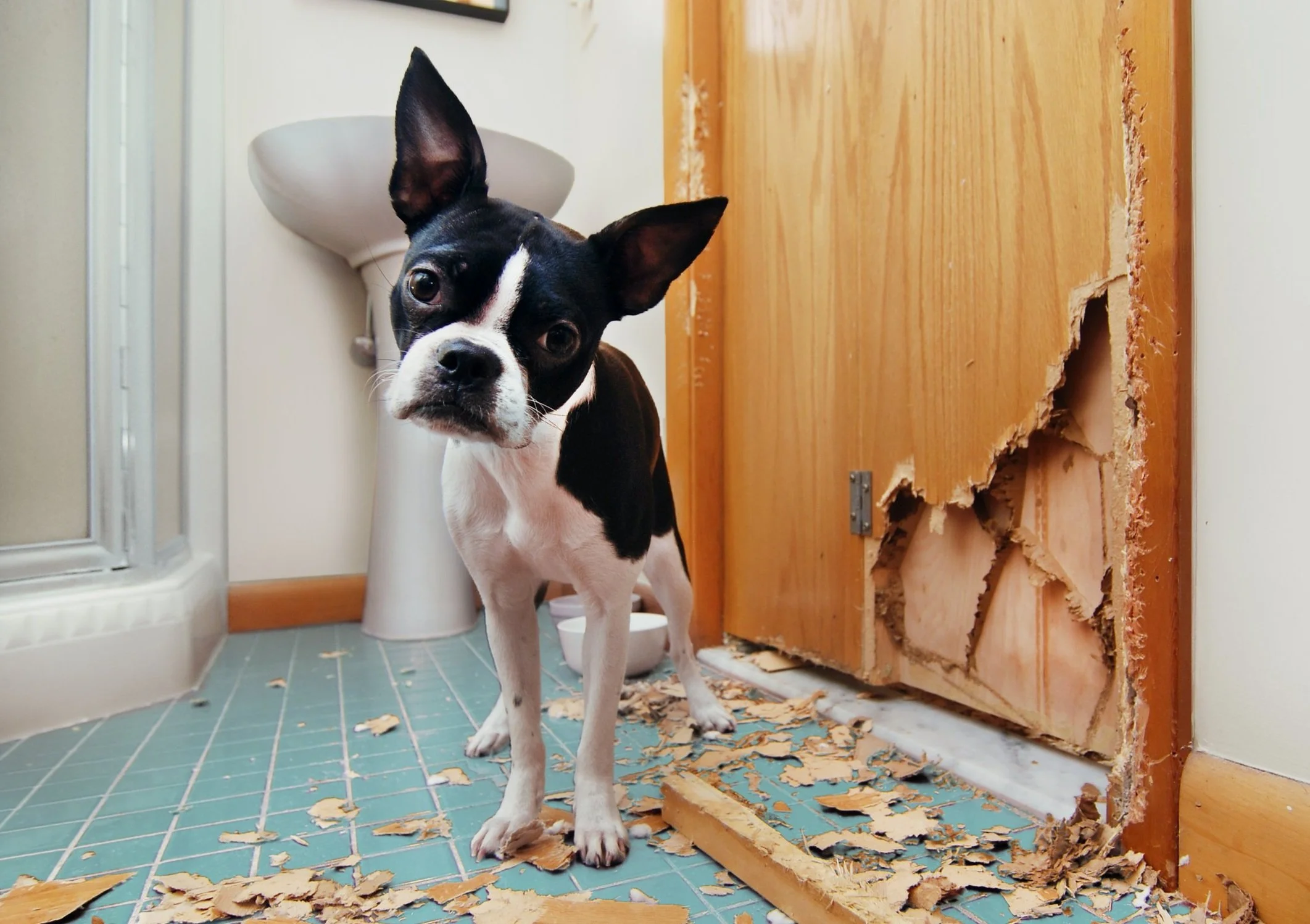
Dog separation anxiety is one of the most stressful behavior challenges for both dogs and their guardians. It occurs when a dog experiences overwhelming panic the moment they’re left alone, often leading to destructive or even dangerous behaviors. By learning to recognize the signs, understand the root causes, and apply proven treatment strategies, you can help your dog build lasting calm and confidence.
Common Symptoms of Separation Anxiety in Dogs
Barking, howling, or whining shortly after you leave
Destructive chewing, digging, or scratching at doors and windows
Pacing, drooling, or panting triggered by pre-departure cues (like grabbing keys)
House-soiling despite reliable potty training
Escape attempts that may cause injuries such as broken teeth or nails
What Causes Dog Separation Anxiety?
Pack instincts that compel a dog to follow you
Missed early independence training during puppyhood or adoption (crate or playpen training)
Sudden lifestyle changes—new job hours, moving homes, or new family members
Past trauma, including rehoming, shelter stays, or sudden abandonment
Lack of physical exercise or mental stimulation in daily life
Treatment and Prevention Strategies
Gradual desensitization and counterconditioning to reduce stress around departures
Enrichment tools like food-stuffed toys and chews to keep your dog engaged when confined
Predictable routines and calming departure cues to prevent anxiety spikes
Guidance from a certified trainer or veterinary behaviorist; medication or calming aids when recommended
A balanced daily schedule combining exercise, training, and restful downtime
By addressing separation anxiety with science-backed, positive reinforcement methods, you’ll turn stressful goodbyes into calm departures—and give your dog the confidence to thrive when home alone.

Dogumenta L.A. - America's First Art Show For Dogs
Dog lovers get ready: America’s first art exhibition for dogs, dOGUMENTA, debuts at FIGat7th in DTLA this September!
3 Puppy Training Shortcuts You Can Do Everyday
Puppy training tips from a Los Angeles dog trainer: Puppy training can start as soon as you bring your pup home and can be as simple as taking a few minutes at mealtimes to create positive associations with your pup’s name, a slap to your thigh, and a pointed finger.

How To Prepare Your Dog For The 4th of July
Dog & Puppy Training Tips: Dogs are social creatures that benefit from being included in family activities. However, if a dog is afraid of fireworks, Independence Day can be a terrifying experience for them. To ensure the 4th of July doesn't turn into a traumatic experience for both you and your dog, it's important to have a plan for keeping your dog safe and comfortable when the fireworks go off. Here are some tips from a Los Angeles dog trainer on how to get your dog or puppy ready for Independence Day.

What is a Doodle Dog?
Doodle dogs are fast becoming the most popular dog breed in America because of their friendly nature and hypo-allergenic and low-shedding coats. There are many kinds of Doodle dog breeds of various sizes depending on the Poodle variant with which they are mixed, however the most popular are the Goldendoodle, the Labradoodle, and the Double Doodle.

5 Biggest Puppy Training Mistakes and How to Avoid Them
Puppy training requires structure, consistency, and patience. Get a professional dog trainer’s 5 top puppy training tips and mistakes to avoid when bringing a new puppy home. Being prepared from the start is the key to successful puppy training!

Dog Training: The Dominance Myth
Debunking the “Alpha Dog” Myth: Modern, Effective Dog Training Tips from a Certified Professional Dog Trainer
Leash reactive dogs—those that bark, growl, or lunge at other dogs or people while on a leash—are increasingly common in urban areas and busy cities. For years, many dog owners were taught the outdated “alpha dog” theory, which suggested that dominating your dog was the key to control.
Science-based training shows a better way. Positive, reward-based methods foster trust, communication, and cooperation, teaching dogs desirable behaviors without fear or intimidation.
By abandoning dominance-based approaches, dog owners can tackle leash reactivity, jumping, and aggression more effectively—building stronger, healthier, and more respectful bonds with their dogs.

How to Safely Socialize Your Puppy Before Full Vaccination
Puppy Training Tips: How to Socialize Your Puppy Before They’re Fully Vaccinated
Socialization is how you help your puppy build positive associations with the world around them during their critical early development stage—between 4 and 16 weeks of age. But if your puppy hasn’t had all their shots yet, how can you safely expose them to new people, sounds, and environments? We’ll show you how.

Dog Training Games: How to Play Hide & Seek to Improve Your Dog’s Recall
At Dog Savvy, we believe dog training should be fun, easy, and effective. One of our favorite games? Hide & Seek. This simple game takes little effort but delivers big results—boosting your dog’s recall skills by creating strong, positive associations with coming when called. You can play it anytime, anywhere, and your pup will love it.
How To Train A Puppy Not To Bite
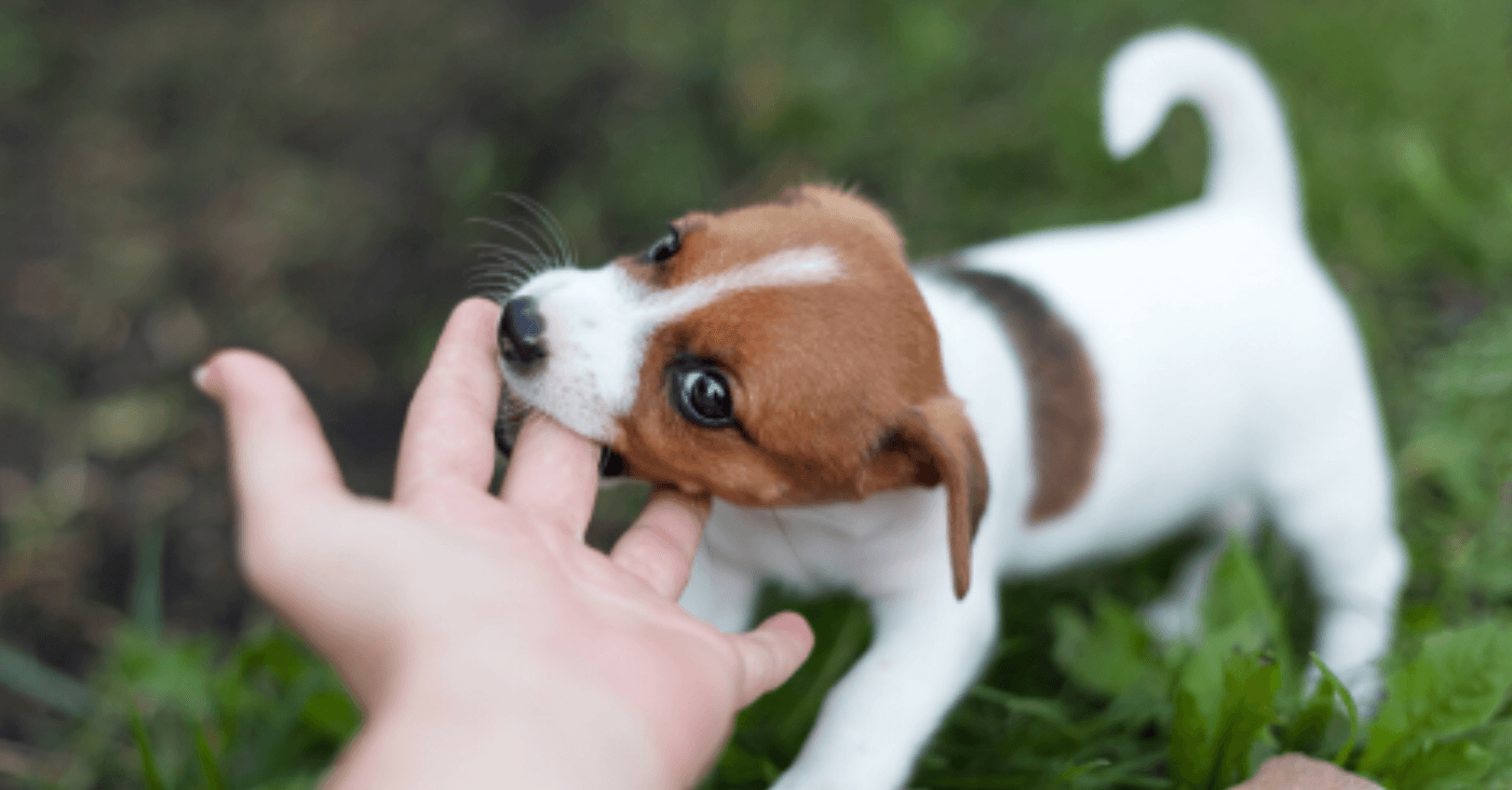
How to teach a puppy not to bite starts with consistency and positive training. The key is knowing how to respond the moment your puppy bites, so you can set clear boundaries and build respectful, gentle play habits. In this guide, you’ll learn proven techniques like redirection, chew toy training, and calm timeouts to stop puppy biting without punishment. Plus, get expert tips from a certified dog trainer to help your puppy grow into a well-mannered, bite-free companion.

How To Train A Dog NOT To Do Something
Understanding how consequences affect your dog is all you need to know to train your dog like an expert dog trainer. So how do you correct a dog using positive reinforcement dog training methods? Find that out and more on the Dog Savvy’s dog training blog ...

Calming Signals in Dogs: The Language of Peace
Dogs have a variety of ways of communicating how they feel, but humans often don't recognize the signals. Learn more about “calming signals” and how dogs communicate from a certified professional dog trainer.
How To Avoid Dog Park Conflicts
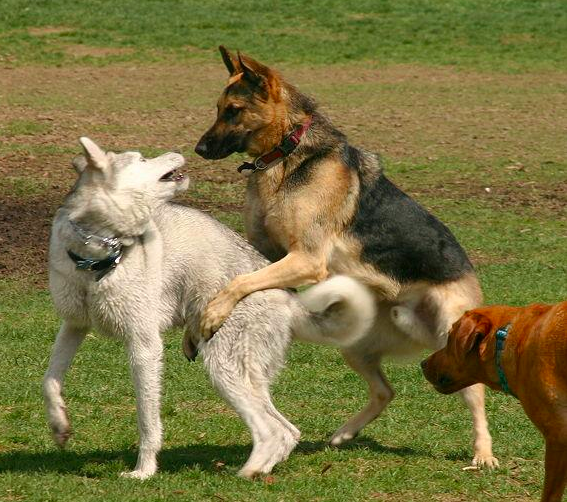
Taking your dog to a dog park can be a fun but sometimes unpredictable experience. To make the visit enjoyable and safe, it’s helpful to do a bit of training beforehand—like teaching your dog to reliably come when called and understanding the essential do’s and don’ts for dog park safety.

How to Potty Train a Puppy Using a Crate and Playpen Setup
Not sure how to potty train your puppy? Get a professional dog trainer’s top 5 tips for how to quickly and effectively housebreak your puppy.

Dog Park Etiquette: Do's & Don'ts
Dogs were built to roam and, more than anything, love running around free. Dog parks, therefore, can be a great way to grant your lovable furball some much-desired freedom where they can blow off some steam. Here are some ways to ensure the dog park always remains a positive experience.